Artificial intelligence is transforming education, offering new tools that enhance learning and educational management.
However, UNESCO warns about the limits of AI and the importance of preserving the irreplaceable role of human teachers.
This article analyzes advances, implications and challenges to integrate AI in an ethical and balanced way in global and local education.
Advances and applications of artificial intelligence in education
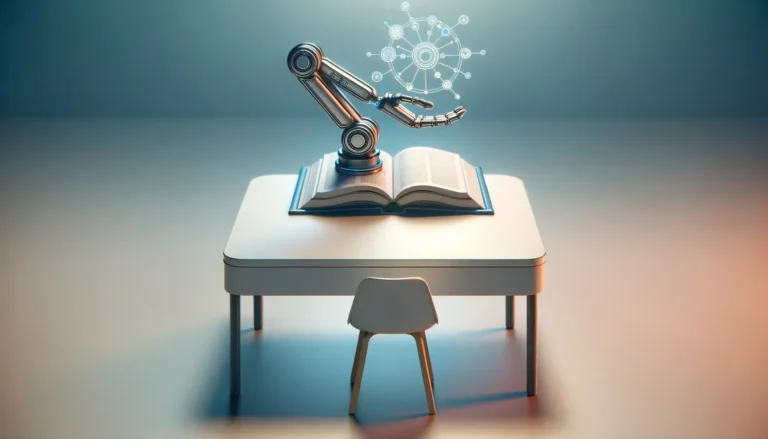
Artificial intelligence has made notable progress in education by 2026, integrating robotics and intelligent agents to facilitate hands-on learning.
These technologies allow for more collaborative, personalized and inclusive environments, also supporting distance education effectively.
In addition, AI automates administrative tasks, helping to create more resilient and accessible educational environments for diverse student profiles.
Personalization of learning and automation of tasks
AI makes it possible to personalize learning by adapting to individual needs, improving the educational experience of each student.
It also automates repetitive and administrative functions, reducing the burden on teachers and allowing them to focus on human and pedagogical aspects.
However, artificial intelligence cannot replicate essential skills such as empathy, ethical judgment, and emotional adaptation of teachers.
Impact of AI on the labor market and educational sectors according to the IMF
The IMF indicates that up to 60% of jobs globally could be affected by AI, including in the education sector, especially in repetitive tasks.
Currently, only 22% of teachers use AI tools, partly due to ethical concerns and fear of professional substitution.
New skills necessary to mitigate disruptive impacts are highlighted, emphasizing the importance of training in the face of automation in education.
UNESCO's position on AI and teachers
UNESCO highlights that artificial intelligence should be a tool that supports teachers, not replaces them in the educational process.
Underlines the importance of preserving the fundamental role of human teaching in the comprehensive training of students.
In addition, it warns about the risks of excessive dependence on technologies that could dehumanize teaching.
AI as a complementary tool, not a substitute
AI must complement teaching work by providing resources and optimizing time, without eliminating personal interaction and support.
Teaching requires human skills that artificial intelligence cannot replicate, such as empathy and ethical judgment.
Therefore, cooperation between AI and educators is key to enriching learning and respecting emotional diversity.
Importance of ethics, teacher training and responsible regulation
UNESCO highlights the need for adequate training for teachers in digital skills and ethical use of AI.
It also insists on establishing regulations that guarantee data protection and avoid bias in artificial tools.
The ethical and responsible approach is vital for AI to be an ally that strengthens educational quality and equity.
Implications for Brazil and Lusophone countries
UNESCO's call urges Brazil and Portuguese-speaking countries to design policies that integrate AI without losing the value of human education.
It is essential that these countries strengthen teacher training with digital skills to face the challenges of future education.
Furthermore, they must prioritize equitable access to technologies so as not to increase educational gaps in their diverse contexts.
Relevance of UNESCO's call for national educational policies
UNESCO encourages Portuguese-speaking governments to adopt regulatory frameworks that promote the responsible and ethical use of artificial intelligence.
It is key that policies guarantee data protection and avoid discrimination derived from biases in AI applied to education.
These recommendations seek to sustain educational quality while respecting the centrality of the educator in the training process.
Challenges and opportunities in the integration of AI in local educational contexts
The incorporation of AI presents challenges such as teacher training and insufficient infrastructure in rural or marginalized areas.
However, it offers opportunities to personalize learning and expand the inclusion of students with different needs.
The challenge is to balance technology and human care, ensuring that AI supports and does not displace the fundamental role of the teacher.
Perspectives towards a balanced and humane education with AI
A balanced education integrates AI without losing focus on the human dimension, guaranteeing quality and inclusion in learning.
Collaboration between technology and teachers is essential to preserve empathy, creativity and values in the educational process.
This approach promotes the comprehensive development of the student, combining technological innovation with personalized support from the teacher.
Need for training in digital skills and critical thinking
Strengthening teacher training in digital skills is key to an effective and ethical integration of AI in education.
Critical thinking should be encouraged so that students and teachers analyze and use AI in a responsible and reflective manner.
Continuous updating ensures that technology enhances learning without replacing human judgment and sensitivity.
Call for investment in ethical AI and strengthening teaching work
Investing in ethical AI ensures that tools respect privacy, avoid bias, and protect the rights of students and teachers.
It is essential to support and strengthen teaching work as the axis of the educational process, highlighting its irreplaceable and human role.
Only with ethical commitment and adequate resources can AI be an ally that enhances the positive impact on education.