Impact of AI on film production
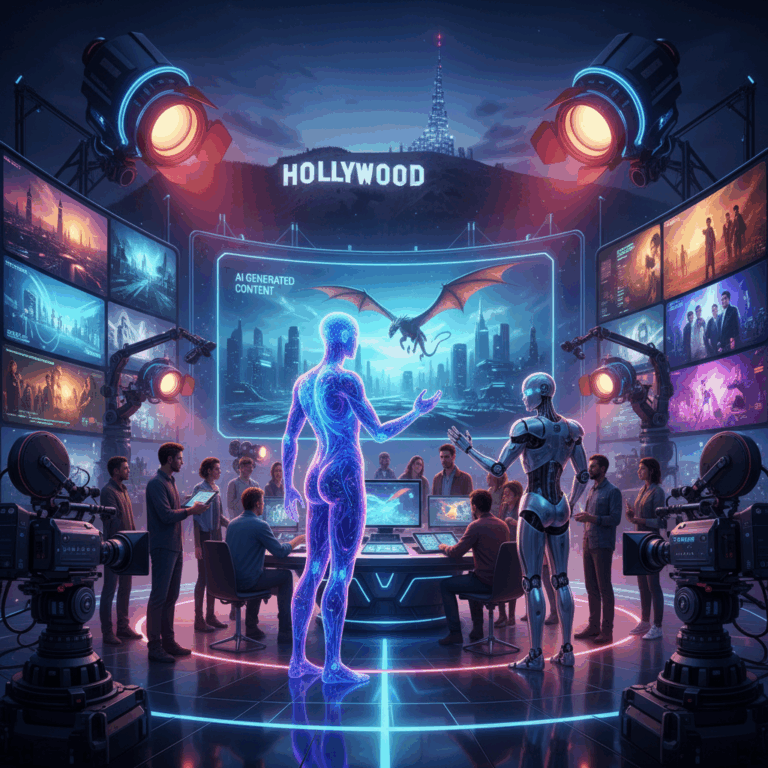
The artificial intelligence it has radically transformed film production in Hollywood, making processes more efficient and creative.
This technology not only improves quality, but also reduces costs and times, consolidating itself as a key resource in today's industry.
Applications in pre-production and script creation
In the pre-production, AI analyzes scripts to predict which scenes will have the greatest emotional and narrative impact, optimizing the structure.
Some studies use algorithms capable of generating realistic dialogues, thus facilitating the creation and dynamic adjustment of storytelling.
This allows screenwriters and producers to make informed decisions, improving quality without sacrificing time during the initial phase.
Optimization in post-production and editing
In the post-production, machine learning tools verify continuity and suggest cuts, accelerating assembly and improving the final product.
These automatic systems make it possible to detect errors that would go unnoticed, guaranteeing visual and narrative coherence.
Thus, editing becomes more precise and less dependent on intensive manual work, favoring filmmakers and editors.
Visual and technological innovations with AI
The artificial intelligence it is revolutionizing visual effects, creating digital characters that bring realism and depth to productions.
AI-based technologies allow images and movements to be generated with great precision, opening up new artistic possibilities in Hollywood.
Visual effects and creation of digital characters
Visual effects with I.A. they improve quality and reduce the time needed to create complex digital environments and characters.
Examples like the movie iguHere ar show how AI allows actors to be rejuvenated digitally, adjusting their performances in real time.
These innovations make more creative and realistic productions possible, at a lower cost, transforming the art of cinema.
Using digital replicas for extras roles
Digital replicas allow human extras to be replaced with avatars created by AI, reducing costs and complexities in filming.
This resource facilitates logistics by eliminating the need for casting and catering for large groups, streamlining filming.
Movies and series already incorporate these replicas with results that are imperceptible to the public, maintaining visual quality.
Institutional acceptance and awards
The Academy of Motion Picture Arts accepts productions with AI in competition, valuing the human role in creativity.
This confirms that the use of digital tools does not harm or favor the nomination, as long as the creative authorship is human.
This institutional recognition drives the development and integration of AI in the film industry.
Work and ethical challenges of AI in Hollywood
The integration of the artificial intelligence in Hollywood it raises strong labor and ethical concerns. Many professionals fear losing their jobs due to automation.
These challenges shape a crucial debate about how to balance technological innovation and respect for rights and human labor in the industry.
Impact on employment and artistic professions
AI has the potential to replace workers in areas such as extras, technicians and artists, causing uncertainty and distrust in the sector.
While it automates repetitive tasks, the risk is the significant reduction in job opportunities for those who depend on these occupations.
Furthermore, this transformation can devalue traditional trades, affecting the diversity and artistic talent that defines Hollywood.
Ethical dilemmas and recent debates
Ethical dilemmas revolve around authorship, the right to image and the possible replacement of actors with digital replicas generated by AI.
The recent strikes show the tension between technological advancement and the protection of human labor, reflecting debates about morality and sustainability.
These discussions require regulations that ensure responsible use, preventing human values from being sacrificed in the name of efficiency.
Future and trends of AI in the multi-media industry
The future of the I.A. in Hollywood it promises to further transform the industry, with advances that will optimize processes and experiences.
Trends point to a balance between advanced technology and human creativity, driving large-scale innovations.
Improved efficiency and reduced costs
The artificial intelligence it will continue to support the automation of tasks, accelerating production and reducing expenses in each phase.
The algorithms will analyze large volumes of data to anticipate needs, optimizing resources without sacrificing artistic quality.
This will allow for more precise and flexible planning, facilitating quick adaptations during filming and editing.
Additionally, cost reduction will encourage studios to experiment with new narratives and innovative formats.
Personalization and new experiences for the viewer
The AI will enable personalized content, adapting plots and characters according to the preferences and behaviors of each viewer.
This will generate a deeper connection, offering unique and dynamic experiences that respond to individual tastes in real time.
Streaming platforms will use these technologies to design more attractive offers and improve the engagement of their audience.
Continuous innovation in cinematographic interaction
It is expected that AI will allow the integration of interactive elements, where the public influences the narrative development of the productions.
This trend will promote hybrid formats between cinema and video games, opening new frontiers for telling stories.