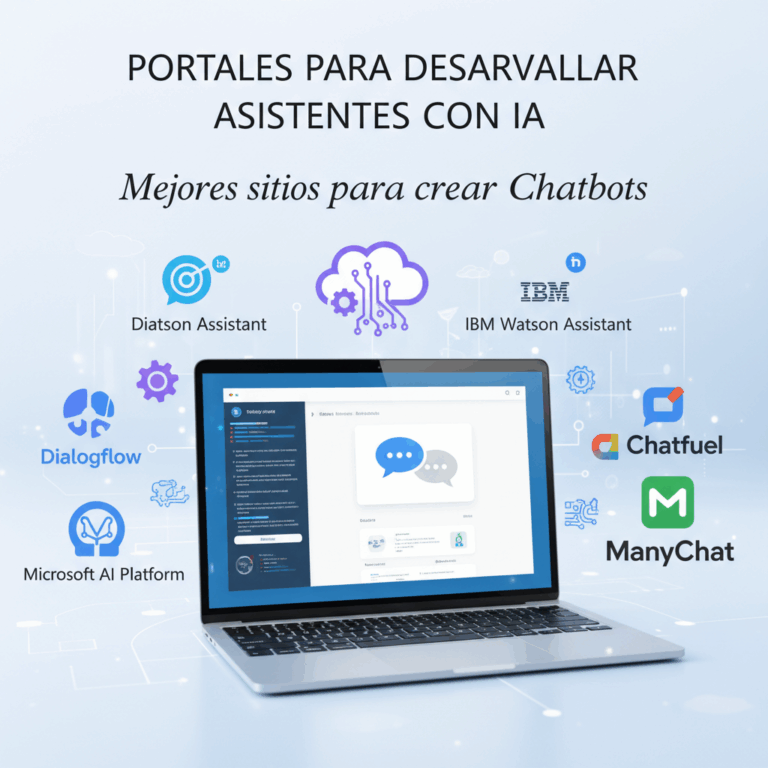
Platforms to create chatbots with AI
The platforms to create chatbots with AI they allow you to design and manage conversational assistants adapted to various needs, from companies to users without technical knowledge.
These portals offer functionalities that range from the basics to advanced options, facilitating integration with different channels such as websites, social networks and instant messaging.
Basic and advanced functions
The basic tools allow you to create simple dialogues with visual editors, ideal for answering frequently asked questions or directing users. They are accessible for beginners.
On the other hand, advanced features include integration with APIs, deep customization and data analysis, aimed at more experienced users and complex projects.
Some platforms offer integration with CRM or internal databases, providing chatbots with capacity for business processes and automated customer service.
Types of users and experience levels
There are platforms that adapt so much to inexperienced users, with intuitive interfaces and pre-designed templates, as well as developers looking for total flexibility.
Beginners can use drag-and-drop editors to create functional wizards without programming, while experts take advantage of open source options and advanced customization.
This allows both small businesses and large organizations to access efficient solutions based on their technical level and specific objectives.
Main portals to develop assistants
Portals to create chatbots offer various options depending on the technical level and needs of each user, from SMEs to advanced developers.
These environments facilitate the design, deployment and management of assistants that can be integrated into popular channels, improving customer interaction.
Botpress: customization and community
Botpress is known for its high customization and developer support, with an active community providing tutorials and support.
Its visual editor allows you to design complex flows without programming from scratch, ideal for companies looking to integrate chatbots with internal systems.
It offers integration with multiple channels and supports use cases such as customer service and advanced automation, standing out for its flexibility.
Tidio: solutions for SMEs
Tidio focuses on small and medium-sized businesses, with a simple visual editor and out-of-the-box templates that make it easy to quickly create chatbots.
Its AI-powered bots automate frequent responses and easily integrate with platforms like Shopify, Wix, and Facebook Messenger.
This platform stands out for its ease of use and rapid implementation, ideal for SMEs that want to improve their customer service without high technical resources.
Crisp, Typebot and Chatfuel: no-code options
Crisp allows you to create conversations with visual blocks and integrates well with messaging systems to improve business communication.
Typebot, open source, offers flexibility with advanced options such as connecting with APIs and spreadsheets, benefiting users with basic technical knowledge.
Chatfuel is aimed at social networks, standing out for its simplicity and effectiveness in managing conversations on Facebook Messenger and WhatsApp.
Other featured and specialized platforms
ManyChat excels in omnichannel strategies, while HubSpot is ideal for those looking for integration with CRM, making customer management easier.
Outgrow specializes in collecting information from leads, and platforms such as Pandorabots or Aivo allow the implementation of advanced chatbots for different sectors.
These alternatives offer varied plans and documentation that help users choose according to their objectives and technical levels.
Common and differentiating characteristics
Platforms to create chatbots usually offer free plans or tests that allow you to explore functionalities without obligation, making it easier for new users to get started.
Additionally, they have tutorials and extensive documentation that support the learning curve and improve the experience during the design and deployment of attendees.
Free plans, tutorials and ease of use
Most portals provide free plans with limited features but enough for basic chatbots, ideal for small businesses or initial testing.
Guided tutorials and videos help you master the platform quickly, making creation accessible even to those without technical training.
Ease of use is reflected in intuitive interfaces and visual editors that simplify building conversational flows without the need for code.
Some notable tools, such as Tidio or Chatfuel, prioritize speed of start-up, focusing on users with immediate needs and limited resources.
Flexibility and integration options
The flexibility varies by platform; some allow advanced customizations and custom development using code or API connectors.
Tools like Botpress and Typebot, being open source, offer a high degree of adaptability to fit specific requirements and complex formats.
Integration with multiple communication channels (Pickweb, social networks, messaging) is essential to maximize the reach of the chatbot.
Additionally, support for CRM systems, databases, or e-commerce platforms expands the practical applications of the conversational assistant.
Tips for choosing the right platform
Selecting the ideal platform to create a chatbot depends on several key factors such as use case, technical level and available resources.
It is essential to analyze specific needs and performance expectations to ensure that the chatbot meets its objectives efficiently.
Evaluation of the use case and technical level
Identifying the purpose of the chatbot, such as customer service, sales or support, helps define what functionalities are necessary for the platform.
Furthermore, the technical level of the user is vital; Beginner users will need platforms with intuitive interfaces and pre-designed templates.
Instead, developers or companies with technical resources can opt for flexible and customizable tools, such as Botpress or Typebot.
Definition of objectives and deployment channels
It is important to define what objectives you seek to achieve with the chatbot, such as increasing sales, improving support or capturing leads, to choose the correct platform.
Likewise, the channel where the assistant will be displayed must be considered, among options such as websites, social networks or messaging applications.
This ensures that the chosen platform offers compatible integrations and facilitates efficient user experience management.