EU regulatory framework for AI
The European Union leads the global regulation of artificial intelligence with the Artificial Intelligence Law, a comprehensive and binding regulatory framework.
This regulation, in force since August 2024, seeks to promote a digital market based on trust, security and respect for fundamental rights.
Its objective is to guarantee a responsible and controlled deployment of AI, balancing innovation and protection for European society.
Principles and objectives of the Artificial Intelligence Law
The EU AI Law promotes principles of transparency, security and protection of human rights in the development and use of artificial intelligence.
Its goal is to ensure that AI systems are designed and used ethically and safely, avoiding risks to individuals and societies.
The framework emphasizes human oversight, risk management, and accountability for AI providers and users.
Risk categories and associated obligations
The regulation classifies AI systems into four categories based on their level of risk: unacceptable, high, limited and minimum.
Systems with unacceptable risk are prohibited because they threaten rights, security or democratic values, such as mass surveillance.
High risks, present in critical sectors, require strict measures such as transparency, risk management and human supervision.
The limited and minimum risk categories apply to systems with less impact, imposing minor information-focused obligations on the user.
Global regulations and ethical codes
Outside the European Union, the United States, China and Canada develop initiatives to regulate artificial intelligence, focusing on their own ethical and regulatory aspects.
These actions seek to control the growth of AI and mitigate risks, although with a smaller binding scope compared to European Law.
Globally, the need for a common framework drives proposals for international pacts that regulate AI from a global perspective.
Initiatives in the United States, China and Canada
The United States has published non-binding recommendations and frameworks that promote responsible innovation and ethics in artificial intelligence.
China is moving towards strict regulations that control technological development, focusing on national security and respect for digital sovereignty.
Canada promotes ethical codes and public policies that balance innovation with rights protection and transparency in AI.
These initiatives reflect different priorities and levels of regulatory commitment that complement the global AI scenario.
World treaty proposed by international leaders
More than 200 world leaders have called on the UN to negotiate a global treaty on AI to address its risks and promote respect for human rights.
The treaty seeks to define rules on digital sovereignty, international security and ethics, creating a common governance framework for artificial intelligence.
The UN General Assembly is expected to move towards a resolution on this treaty in 2026, marking a milestone in international AI regulation.
Role of the UN and future expectations
The UN acts as a forum for global cooperation, facilitating dialogues between countries to harmonize laws and regulations on artificial intelligence.
International organizations and specialized summits seek to create technical and legal standards that support the safe and ethical development of AI.
The future of the global regulatory framework aims to combine binding laws, ethical codes and multilateralism for equitable deployment of artificial intelligence.
Balance between innovation and protection
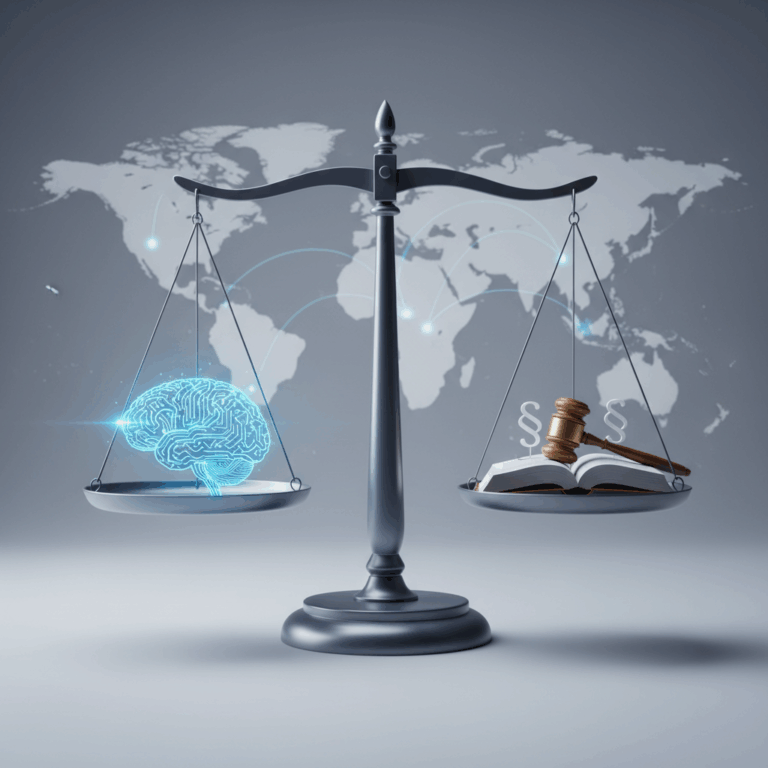
The main challenge of AI regulation is to balance the promotion of innovation and investment with the protection of society against possible damage.
Adequate regulation seeks to encourage technological development without sacrificing security and the human rights in the use of automated systems.
This balance is essential to building a trusted AI marketplace that benefits all stakeholders, from businesses to end users.
Impact of regulation on investment and society
Strict regulations may initially create uncertainty for investors, but in the long term they foster an environment of trust and stability.
Society is protected against risks such as bias, discrimination or failures in critical systems through supervision and transparency mechanisms.
Furthermore, clear regulation drives the ethical and responsible adoption of AI, contributing to sustainable and fair development.
Inspiration and adaptation of European legislation
The EU Artificial Intelligence Law serves as an inspiring model for other regions that want to create robust and balanced legal frameworks.
Many countries adapt their policies taking into account the risk categories and obligations defined in the European framework.
This influence promotes global harmonization of standards, facilitating international cooperation and trade in reliable technologies.
International cooperation and harmonization
International cooperation is key to establishing a harmonized framework that regulates artificial intelligence effectively and globally.
International organizations and summits work to define common standards that guarantee the safe and ethical development of AI systems.
Organizations and summits for common standards
Entities such as the European Union Agency, the UN and specialized organizations promote conferences and forums to create shared technical and legal standards.
These meetings allow countries with different levels of technological development to join forces to face global AI challenges.
The establishment of common standards seeks to facilitate trade, innovation and the protection of human rights in an advanced technology environment.
Combination of laws, ethics and multilateralism
A comprehensive approach combines legal regulations, ethical principles and multilateral cooperation to regulate AI fairly and effectively.
This model allows us to balance technological innovation with the protection of fundamental values and citizen rights in different regions.
Global legal and ethical harmonization strengthens trust in AI and promotes its responsible use in commercial and social contexts.