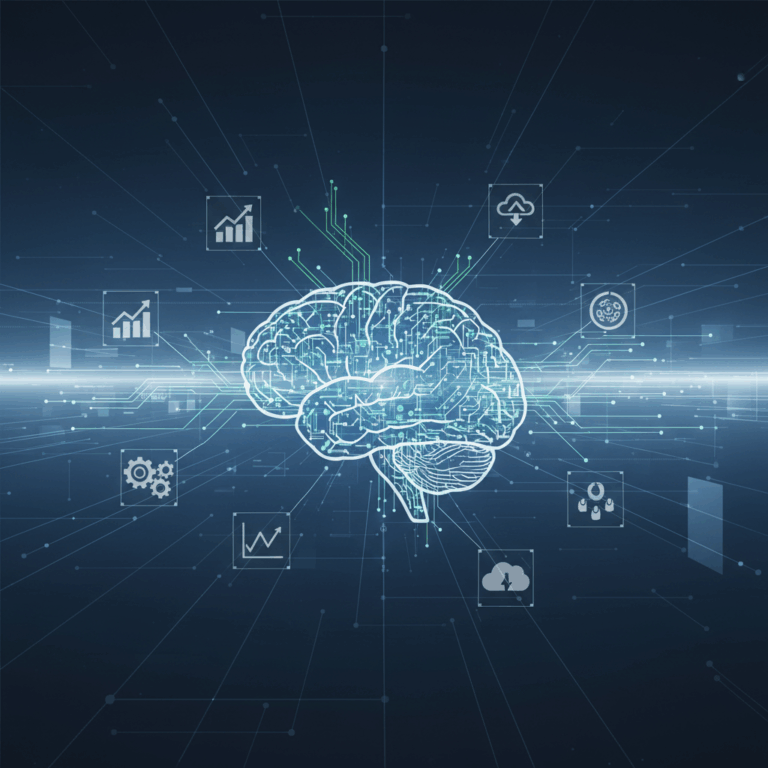
Fundamentals of cognitive computing
The cognitive computing it is a branch of artificial intelligence focused on imitating human thinking through advanced systems. It uses self-learning algorithms to continually improve.
These systems process a large amount of data, recognize patterns and understand natural language, allowing a more human and autonomous interaction. Thus, they solve complex problems without direct intervention.
Definition and main characteristics
Cognitive computing is not limited to following simple instructions, but learns from experience and adapts its performance. It uses techniques such as data mining and language processing to acquire knowledge.
This enables machines to respond in a contextualized way and improve over time. Its main objective is to facilitate complex decision making, integrating diverse and dynamic information.
Featured example: IBM Watson
IBM Watson is an iconic example in the field of cognitive computing. It is designed to understand and process human language naturally, interacting effectively with users.
Watson learns from each interaction to increase the accuracy of his responses, demonstrating how a cognitive system can improve the quality and relevance of the information offered.
Applications in business sectors
Cognitive computing revolutionizes business sectors by processing large volumes of data and offering personalized solutions. Its use creates more efficient and adapted experiences.
Their ability to learn and adapt allows companies to improve processes, optimize resources and make more informed decisions in different key areas of the business.
Customer service
In customer service, cognitive systems such as advanced chatbots allow natural and personalized interactions. These resolve doubts and anticipate user needs.
Their continuous learning improves the customer experience, providing accurate answers and specific recommendations, increasing satisfaction and loyalty.
Medical diagnosis
Cognitive computing analyzes clinical data and symptoms to assist in medical diagnoses. Helps professionals make better decisions and more appropriate treatments.
In addition, it integrates information from medical literature to identify complex patterns, speeding up the process and reducing errors in patient care.
Finance
This approach allows you to detect fraud, evaluate credit risks and offer personalized financial advice. Systems interpret behaviors and anticipate financial risks accurately.
Contextual intelligence facilitates strategic decision making, improving risk management and optimizing investments and financial resources.
Human resources and logistics
In human resources, automation analyzes resumes and interviews using natural language recognition to identify competencies. This speeds up talent selection.
In logistics, cognitive computing optimizes supply chains with real-time analysis, predicting demands and recommending efficient routes to improve operability.
Impact on business innovation
Cognitive computing drives business innovation by transforming traditional processes into smarter, more adaptive systems. Your ability to learn and analyze data in real time redefines how organizational challenges are addressed.
Companies that adopt these technologies improve their efficiency, reduce costs and manage to make faster and more accurate decisions, which enhances their competitiveness in dynamic and digital markets.
Process transformation and decision making
The integration of cognitive systems alters internal dynamics, allowing complex tasks to be automated and resources optimized. This facilitates a strategic approach based on contextualized data and predictive analytics.
Additionally, decision making becomes more agile and informed, as machines provide valuable insights that people can use to assess risks and opportunities more clearly.
This change generates a business culture oriented towards continuous innovation, favoring rapid adaptation to market changes and promoting creative solutions supported by artificial intelligence.
Benefits and challenges of cognitive computing
Cognitive computing offers competitive advantages key for companies seeking to innovate and improve processes. Its capacity for continuous learning facilitates adaptation in changing environments.
However, implementing these systems proposes technical and cultural challenges, which require strategy and commitment to harness their full potential in business transformation.
Competitive advantages for companies
Cognitive computing enables businesses make more informed decisions, based on deep analysis of complex and contextual data. This improves efficiency and reduces risks.
Plus, it makes it easier personalized interactions with clients and optimizes internal processes, which drives innovation and strengthens competitive position in dynamic markets.
Cognitive solutions help discover hidden opportunities by identifying patterns and trends, allowing you to anticipate demands and respond quickly to the competition.
Challenges in implementation and adaptation
One of the main challenges is the integration of cognitive computing with legacy systems, which can involve high costs and technical complexity.
It is also vital to overcome the resistance to change within organizations, since adopting new technologies requires modifying processes and business culture.
Ethical and responsible data management is another challenge, guaranteeing privacy and transparency, to gain user trust and avoid legal risks.
Interesting information
Companies that successfully integrate cognitive computing they can increase your productivity by up to 40%, according to recent studies, demonstrating its tangible impact on the business.
The continuous training of the systems allows them to improve with each interaction, turning them into strategic assets that evolve along with the needs of the market.