Impact of smart platforms on education
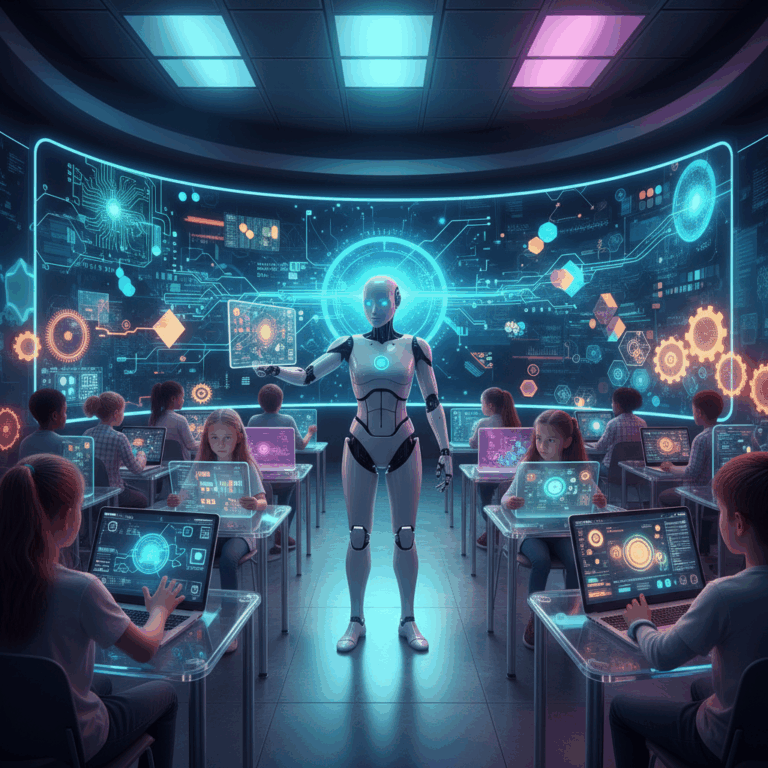
Smart platforms revolutionize education by personalizing and adapting learning. Thanks to AI, each student receives an educational process tailored to their needs.
These systems analyze data in real time to create individualized learning paths, improving retention and academic performance. Education becomes more efficient and relevant for each user.
Personalization and adaptive learning
Personalization is a key feature on smart platforms. They identify strengths and weaknesses of each student to recommend specific materials and adapt the pace of study.
Adaptive learning allows teaching to be adjusted to student progress, offering immediate feedback and simulating personalized tutoring that encourages motivation and interest.
In addition, automated evaluation detects difficulties instantly, facilitating precise interventions and improving the educational experience with more attractive and effective content.
Automation of administrative tasks and teaching role
Automating tasks such as assessment management and school organization frees up teachers' time. This allows them to focus on creative and value-added activities.
The role of the teacher becomes a companion and mentor, focused on developing critical skills, creativity and complex solutions, instead of bureaucratic tasks.
Platforms with virtual tutors and chatbots, such as Khan Academy, facilitate equitable access, especially in regions with teacher shortages, expanding quality education.
Features and benefits of smart platforms
Intelligent platforms use advanced algorithms to analyze data in real time, allowing for personalized and flexible education. This optimizes the learning process adapted to each student.
In addition, they incorporate virtual tutors who provide continuous support, facilitating equitable access to quality education. These tools improve efficiency and foster a more inclusive educational environment.
Algorithms and data analysis in real time
Algorithms allow large volumes of educational data to be processed to detect individual patterns and needs. This capability drives informed and personalized pedagogical decisions.
Real-time analysis adjusts content and activities according to the student's progress and difficulties. Thus, retention is improved and the pace is adapted to maximize learning.
These platforms surpass traditional methods by offering continuous and dynamic monitoring, making teaching a more efficient and relevant process for each student.
Virtual tutors and equitable access
Virtual tutors act as personalized guides who answer questions and explain concepts immediately. This strengthens the student's autonomy and commitment to their learning.
Thanks to this technology, the educational gap is reduced, especially in areas with a shortage of teachers. Quality education becomes accessible to a greater number of people.
Platforms like Khan Academy integrate intuitive chatbots that adapt support according to the student's level, guaranteeing an inclusive and effective educational experience.
Optimization of the educational process
Task automation allows teachers to focus on mentoring and developing critical skills, leaving repetitive tasks in the hands of technology.
This creates a more dynamic and student-centered environment, where resources are used efficiently to maximize time and results of the educational process.
Furthermore, the optimization of learning through these platforms favors the adaptability of education to different contexts and teaching styles.
Complementary technologies and educational future
The integration of technologies such as virtual and augmented reality revolutionizes the educational process, creating immersive environments that improve student understanding and interest.
Furthermore, global expansion through automatic translation enables access to educational content in multiple languages, facilitating inclusive education worldwide.
Integration with virtual and augmented reality
Virtual and augmented reality offer immersive educational experiences that allow students to interact with concepts visually and practically, increasing retention.
These technologies complement artificial intelligence, generating simulations and personalized environments that adapt learning according to the student's progress and needs.
Using these tools improves motivation and engagement, making complex topics more accessible and attractive to diverse student profiles.
Global expansion and machine translation
AI-powered machine translation reduces language barriers, allowing educational materials to reach diverse audiences in real time and accurately.
This global expansion contributes to democratizing education, facilitating access to quality resources regardless of geographic location or native language.
In addition, machine translation integrated into platforms allows fluid interaction between students and virtual tutors, optimizing personalized support at a global level.
Challenges and ethical considerations
The incorporation of artificial intelligence in education is important ethical challenges related to data protection and student privacy. It is essential to guarantee security.
Furthermore, it must be ensured that technology does not replace human contact, preserving the emotional and ethical dimension of education. The combination of AI and humanity is essential for comprehensive learning.
Data protection and privacy
Intelligent systems collect large amounts of sensitive data to adapt learning. Therefore, it is necessary to implement robust measurements to protect this information.
Privacy must be a priority, establishing clear limits on who accesses the data and how it is used, avoiding risks of misuse or leaks that affect student trust.
Compliance with current regulations and transparency in data management constitute basic pillars for the responsible development of these educational platforms.
Preservation of the human dimension in education
Although AI enhances efficiency, it is crucial that technology complements and does not replace human interaction in teaching, maintaining the emotional and ethical support of the teacher.
Education is also a social and emotional process, where values such as empathy and personalized tutoring require human presence to enhance the comprehensive development of the student.
Therefore, the integration of intelligent platforms must focus on facilitating the role of the teacher and enriching the educational experience, without dehumanizing learning.