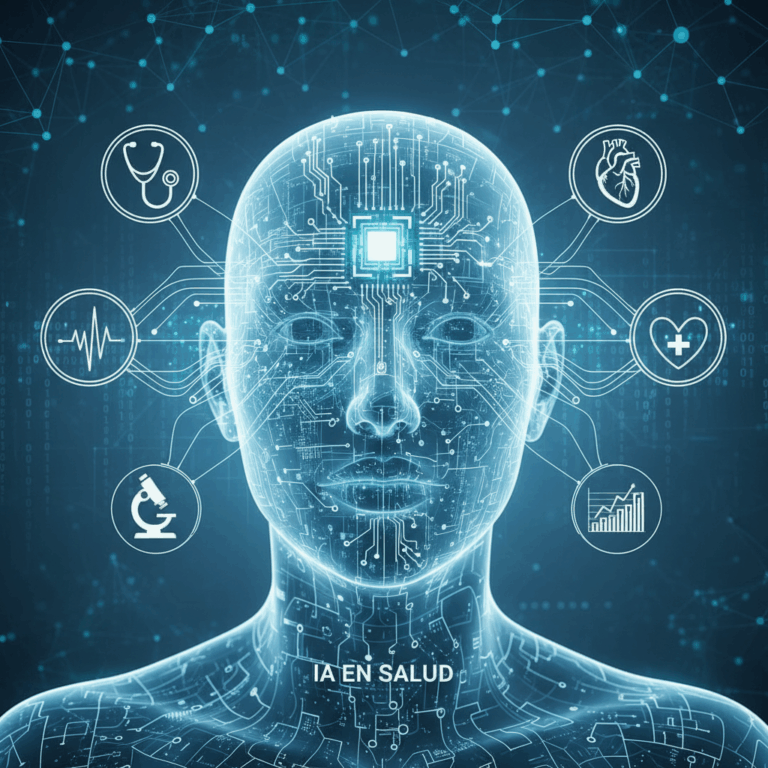
Impact of AI on medical diagnosis
The artificial intelligence it is revolutionizing medical diagnosis by allowing the detection of diseases in very early stages. Its ability to analyze large volumes of data surpasses traditional methods.
With AI, healthcare professionals can identify patterns and signals that go unnoticed by the naked eye, improving the accuracy and speed of diagnosis. This is essential for more effective treatments.
Furthermore, the integration of AI in healthcare is facilitating clinical decision-making, helping to reduce errors and increase confidence in diagnostic results.
Early detection of diseases
AI analyzes multiple data sources, such as medical history and laboratory results, to identify early signs of pathologies. This facilitates timely interventions that can save lives.
Its ability to recognize subtle patterns in symptoms and outcomes allows diseases to be detected before they fully manifest, especially in conditions with silent progression.
This early detection is vital for serious diseases such as cancer, diabetes or cardiovascular disorders, where reaction time has a great impact on recovery.
Diagnostic imaging with advanced algorithms
AI algorithms, trained with millions of medical images, can recognize anomalies with greater precision than many human specialists. This improves diagnostic accuracy.
In x-rays, tomography scans and MRIs, AI detects signs of cancer, fractures or early infections, speeding up the diagnosis process and reducing the burden on professionals.
This technology optimizes the interpretation of complex images, providing fundamental support in clinical decision-making and promoting faster and safer care.
Applications of AI in chronic and rare diseases
The I.A. it plays a crucial role in the management of chronic and rare diseases, facilitating comprehensive analyzes that combine multiple sources of medical information. This contributes to faster and more accurate diagnoses.
By interpreting complex data, AI helps identify patterns in symptoms and family history that may go unnoticed, improving understanding of these difficult-to-diagnose conditions.
These applications allow early and personalized treatments, which is essential to improve the quality of life and adequate follow-up of patients with rare or long-term diseases.
Analysis of symptoms and family history
AI examines reported symptoms and family history for signs that could indicate chronic or rare diseases. This comprehensive evaluation speeds up the diagnostic process.
By integrating large volumes of data, intelligent systems can identify complex correlations between symptoms and genetic factors, resulting in more accurate and timely diagnoses.
This approach reduces wait time and errors, giving doctors a more complete view to personalize patient care and anticipate complications.
Accelerated diagnostic hypotheses
AI generates diagnostic hypotheses quickly, using algorithms that consider multiple variables simultaneously, something that would traditionally take weeks or months. This is vital in rare diseases.
By proposing possible diagnoses based on identified patterns, AI guides professionals towards clinical examinations and specific tests, optimizing the use of resources and improving results.
This agility reduces clinical uncertainty and allows treatments to be started early, increasing the chances of success and easing the patient's emotional burden.
Genetic studies for diagnostic accuracy
AI-powered genetic analyzes evaluate large amounts of genomic data to identify mutations related to chronic or rare diseases, improving diagnostic accuracy.
These studies facilitate the understanding of the genetic origin of certain pathologies, allowing personalized therapeutic strategies and predictions about the evolution of the disease.
Interesting fact
AI has managed to accelerate the interpretation of genetic sequences from weeks to days, representing a significant advance in the timely diagnosis and treatment of rare diseases.
Personalization of treatments using AI
Artificial intelligence is transforming the personalization of treatments, adapting them to the unique profile of each patient. This significantly improves effectiveness and safety.
By integrating genetic data, lifestyle, and medical history, AI can recommend more accurate therapies, reducing side effects and optimizing clinical outcomes.
This approach adapts treatment to individual needs, marking an important step towards more precise and patient-centered medicine.
Therapies adapted to the genetic profile and lifestyle
AI analyzes genetic information and personal habits to design specific therapies that fit the patient's metabolism and characteristics. This increases effectiveness.
By considering factors such as diet, physical activity and environment, treatments can be modified to maximize benefits and minimize risks, promoting comprehensive care.
This personalized adaptation is especially important in complex diseases, where responses to treatments vary widely between individuals.
Optimization of medication dosage
Artificial intelligence optimizes dosing by adjusting amounts based on individual data such as weight, age, and clinical conditions. This reduces possible errors and adverse effects.
Through continuous analysis of biological parameters, AI enables dynamic adjustments, ensuring that each patient receives the most appropriate dose for their specific situation.
This precision in dosage contributes to improving the adherence and effectiveness of the treatment, generating greater safety and more consistent results.
Improvements in patient care with AI
Artificial intelligence is transforming patient care by providing ongoing support through virtual assistants and chatbots. These tools improve communication and monitoring in real time.
Thanks to these advances, the patient experience is personalized and made more accessible, facilitating appointment management, symptom monitoring and reminders that increase treatment adherence.
These innovations contribute to more proactive care, reducing complications and optimizing the time of healthcare personnel in critical interventions.
Virtual assistants and chatbots in continuous support
AI-based virtual assistants offer ongoing support to answer questions, guide medication use, and manage medical appointments, improving the patient experience.
These systems can monitor vital signs using connected sensors, alerting professionals to any abnormalities, increasing safety and control outside the hospital.
Being available 24/7, chatbots facilitate constant communication, reducing the workload of professionals and allowing more agile and efficient service.
Reduction of hospitalizations and adherence to treatment
AI helps identify patterns that can predict complications, allowing early interventions that decrease hospitalizations. This improves the patient's quality of life.
Additionally, through personalized reminders and continuous monitoring, AI encourages compliance with medical indications, key to therapeutic success and relapse prevention.