Adoption and Challenges of AI in Latin America
The artificial intelligence it is transforming Latin America, with notable progress in several countries that promote its technological and economic development. The region shows accelerated growth in AI adoption, exceeding expectations.
Countries such as Chile, Brazil and Uruguay are leading adoption, harnessing the potential of AI to improve key sectors. However, this expansion faces important limitations that are crucial to overcome to consolidate its progress.
Leading countries in AI adoption
Chile, Brazil and Uruguay stand out as the nations with the highest adoption of artificial intelligence in Latin America, thanks to support policies and growing technological ecosystems.
These countries have managed to integrate AI solutions in areas such as health and industry, positioning themselves as regional references. His leadership drives competitiveness and the development of new projects based on advanced technologies.
Government engagement and collaboration with the private sector play a key role in accelerating the implementation of intelligent systems. Digital infrastructure and access to reliable data also contribute to this advancement.
Main challenges: talent and financing
Despite progress, Latin America faces significant difficulties in the shortage of specialized talent in AI, which limits the capacity for innovation and project development.
Furthermore, insufficient financing is a recurring obstacle that prevents the expansion of large-scale technological solutions. It is necessary to increase investments and promote educational programs.
Strengthening the training of professionals in areas related to AI and creating financial support mechanisms are fundamental strategies to overcome these barriers and guarantee sustained growth.
Global Impact of AI in Key Sectors
The artificial intelligence it is revolutionizing essential sectors globally, driving significant advances that improve efficiency and innovation in various areas.
Its ability to process large volumes of data allows it to transform industries, from cybersecurity to medicine, generating new models and opportunities in the global market.
Transformation in cybersecurity and medicine
In cybersecurity, AI detects threats quickly and accurately, anticipating attacks and strengthening digital protection in real time. This improves defense against complex cyberattacks.
In medicine, AI facilitates early and personalized diagnoses, analyzing images and clinical data to optimize treatments and improve patient care efficiently and safely.
This technological integration not only accelerates medical processes, but also supports research, developing innovative solutions for complex and emerging diseases.
Innovations in energy and industry
AI drives energy innovations by optimizing consumption and managing smart grids, contributing to sustainability and efficiency in electrical generation and distribution.
In industry, process automation using AI reduces costs and errors, increasing productivity and allowing advanced control in the production and maintenance of systems.
These innovations promote responsible use of resources and encourage the development of clean technologies adapted to the current demands of the global market.
Improved personal and professional productivity
AI increases productivity by allowing you to better manage time and tasks, with tools that automate repetitive activities in work and academic environments.
These intelligent solutions facilitate personal organization, promote concentration and enhance capabilities, adapting to individual needs to achieve better results.
In addition, AI is present in platforms that help decision making, optimizing resources and raising the quality of work in different professional sectors.
Integration of AI in Technologies and Tools
The integration of the artificial intelligence in various technologies, it has accelerated the evolution of digital tools that improve user experience and operational efficiency.
Platforms and operating systems now incorporate intelligent functions, facilitating processes and providing innovative solutions for the management of daily and professional activities.
New features in operating systems: Windows 11
Windows 11 has integrated AI features that revolutionize file management, such as object recognition and smart suggestions within File Explorer.
These functions allow for more intuitive organization and agile access to documents, improving interaction and productivity for users at different levels.
The system leverages AI algorithms to anticipate user needs, simplifying tasks and optimizing workflow in personal and work environments.
Automation and optimization of processes
AI enhances automation in different sectors, optimizing processes from industrial production to administrative management with greater speed and precision.
This automation reduces human error and frees up resources for tasks that require creativity and complex analysis, promoting greater efficiency in operations.
By integrating AI, organizations can improve their competitiveness by streamlining internal processes and offering products and services that are more tailored to market demands.
AI and the Fight against Disinformation
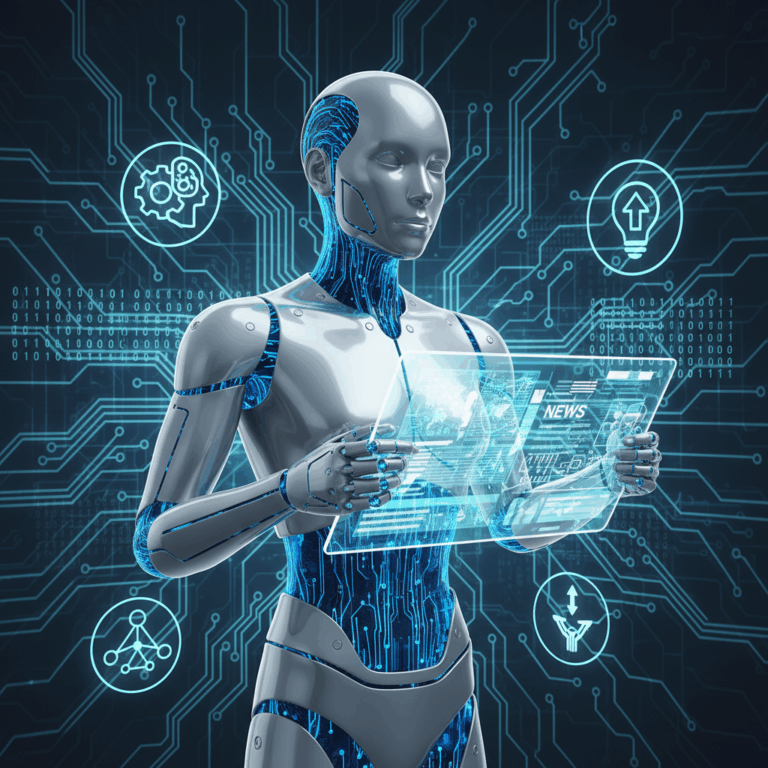
The artificial intelligence it plays a crucial role in the fight against misinformation, improving the detection of fake news and promoting truthfulness in digital media.
Using advanced algorithms, AI analyzes large volumes of data to identify patterns and signals that indicate misleading content, contributing to a more reliable information environment.
Detection of fake news with AI
AI systems use natural language processing techniques to evaluate the veracity of news, detecting inconsistencies and manipulations in texts and media.
These models learn from databases with examples of misinformation to recognize common characteristics in fake news, continually improving its accuracy and effectiveness.
By automating this task, AI helps platforms and users filter out misinformation, reducing the negative impact this news has on society.
Analysis and verification of online sources
AI also makes it easier to verify sources by tracking the origin of information and evaluating the credibility of websites and authors in real time.
Using machine learning techniques, it identifies suspicious patterns and crosses data with reliable sources, ensuring deep and fast analysis.
This technology empowers journalists and fact-checkers, offering tools to validate facts and improve the quality of content disseminated on the Internet.