Transformation of learning with AI
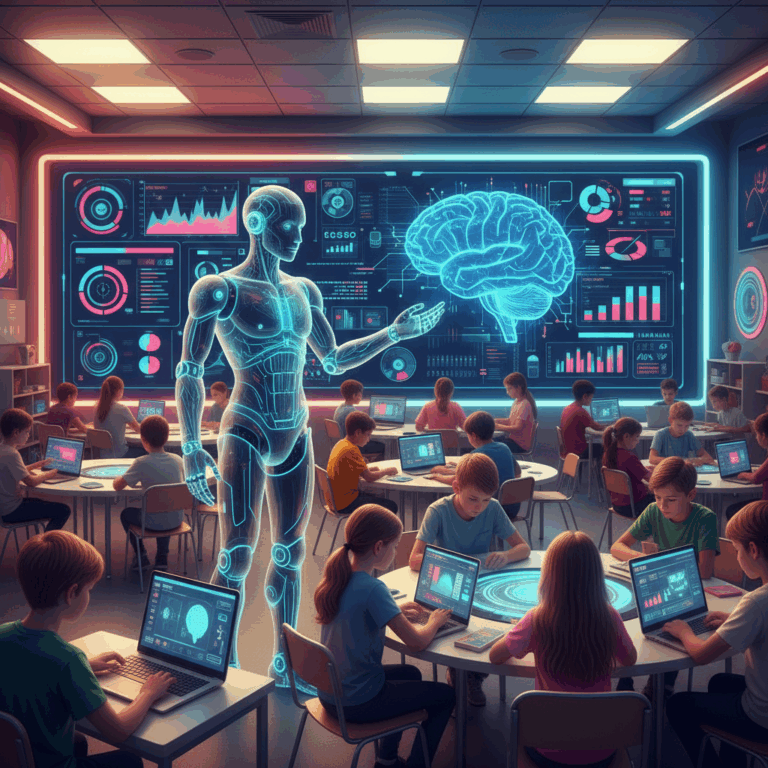
Artificial intelligence is revolutionizing learning by offering solutions that adapt the educational process to the individual needs of each student.
Thanks to AI, it is possible to personalize content and methods, optimizing time and improving students' understanding at different levels.
This transformation facilitates more dynamic and inclusive educational experiences that promote effective and motivating learning.
Personalization of learning
AI allows you to create personalized educational itineraries, adjusting content, pace and methodology to enhance the performance of each student.
Through data analysis, the learning style is identified and the material is adapted, making the process more effective and motivating.
This encourages greater autonomy and commitment, as students receive ideal support based on their strengths and areas for improvement.
Adaptive learning systems
Adaptive systems use algorithms to modify the difficulty and presentation of content based on student performance.
These systems allow each student to advance at their own pace, receiving specific challenges or aids to optimize their learning.
Additionally, continuous monitoring provides valuable data for teachers, facilitating timely and personalized interventions.
Benefits for teachers and educational administration
The integration of artificial intelligence in education offers clear benefits for teachers and administrative management, optimizing resources and time.
This technology allows educators to focus on higher-value pedagogical activities by reducing their operational burdens and streamlining processes.
Thus, collaboration between AI and humans promotes a more effective educational environment focused on the real needs of students.
Improvement in teaching efficiency
AI helps improve teacher efficiency by automating repetitive tasks and facilitating access to information relevant to teaching.
Teachers can spend more time preparing pedagogical content and providing personalized support to their students.
This generates a positive impact on educational quality, by enhancing teaching work and reducing professional burnout.
Automation of administrative tasks
Intelligent tools automate processes such as exam correction, grade recording and report generation.
This administrative relief allows educational teams to optimize their management and focus on academic development.
Additionally, the accuracy of these solutions reduces human error and improves transparency in school administration.
Focus on interaction with students
Less time on administrative tasks means that teachers can increase the quality of direct interaction with students.
AI facilitates the analysis of individual needs, helping to design more effective and motivating pedagogical strategies.
This strengthens the bond between teacher and student, essential for meaningful learning and comprehensive development.
Inclusion and accessibility in AI education
Artificial intelligence drives educational inclusion by offering tools that facilitate access to learning for all students, regardless of their abilities.
With resources such as automatic translation and subtitling, cultural and linguistic barriers are eliminated, guaranteeing a more equitable and accessible education.
This incorporation improves participation and academic performance, promoting an environment where each student can fully reach their potential.
Translation and subtitling tools
AI technologies allow content to be translated in real time, facilitating understanding for students from diverse linguistic backgrounds.
Automatic subtitling is essential for students with hearing difficulties, as it ensures that the message is clearly understood.
These tools help ensure that learning does not depend on language or disability, promoting inclusive and accessible education for all.
Equal educational opportunities
AI helps level the educational field, offering resources adapted to special needs and different learning styles.
This ensures that each student has access to appropriate content and necessary support, regardless of their social context or abilities.
In this way, artificial intelligence is key to reducing gaps and promoting fair and quality education for all students.
Challenges and ethical considerations
The implementation of AI in education presents important challenges that must be addressed to ensure responsible and fair use.
It is essential to maintain a balance between technology and human interaction, preserving the social and emotional value of learning.
Additionally, educational equity can be affected by implicit biases in the algorithms used by these technologies.
Technological dependence and limitation of human interactions
Increased technological dependence in education can reduce personal interactions, key to social and emotional development.
Interaction with teachers and peers stimulates social skills that AI cannot yet fully replicate.
Therefore, it is vital to combine intelligent tools with human support that preserves dialogue and educational empathy.
Algorithm biases and educational equity
AI algorithms may contain biases that reinforce inequalities, affecting access and educational quality for certain groups.
This can lead to discrimination or inappropriate recommendations that limit the learning potential of vulnerable students.
Constant monitoring and the inclusion of diversity in systems development are essential to promote fair education.