Main benefits of AI in teleworking
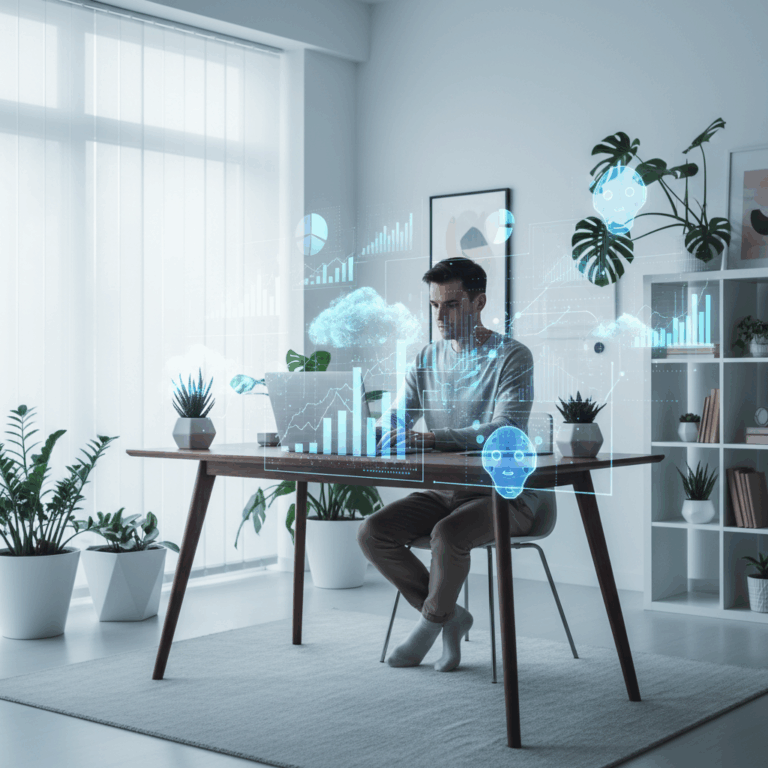
The artificial intelligence it has transformed teleworking, making it more efficient and flexible. Its impact is noticeable in the automation of tasks and in the improvement of remote collaboration.
Professionals can now focus on creative and valuable activities, while AI takes care of repetitive tasks. This improves performance and reduces work-related stress.
Furthermore, with AI, communications and remote teamwork are more fluid, favoring a digital work environment adapted to current needs.
Task automation and increased productivity
AI automates routine processes such as managing agendas, scheduling meetings and sending reminders, freeing up time for strategic tasks. This increases the productivity of the workers.
Intelligent tools generate reports and offer immediate support through chatbots, increasing the efficiency and autonomy of employees when teleworking.
By reducing the burden of minor management, AI also helps reduce work stress, facilitating a better focus on activities that require creativity and innovation.
Improvement in remote communication and collaboration
AI platforms eliminate background noise and improve video conferencing quality, facilitating clear, professional meetings from home.
Machine translation and instant transcription capabilities allow multicultural and multilingual teams to work together without language barriers.
These technologies promote more agile and collaborative communication, making the interaction between team members more efficient and accessible.
AI tools and technologies for the home office
The artificial intelligence tools they have become essential elements for teleworking. They allow you to optimize daily tasks and improve communication between distributed teams.
From virtual assistants to advanced video conferencing platforms, AI offers innovative solutions that facilitate a more productive and collaborative remote work environment.
These technologies not only automate processes, but also eliminate language barriers and improve the work-from-home experience for professionals and companies.
Virtual assistants and chatbots
Virtual assistants and chatbots are smart applications that help in managing repetitive tasks, such as organizing agendas or answering frequently asked questions. They are available 24/7.
These tools improve worker autonomy, allow immediate support and free up time for higher value activities, avoiding constant interruptions in the workflow.
In addition, its integration with other platforms facilitates the coordination and monitoring of projects, optimizing remote work and increasing team productivity.
AI video conferencing platforms
AI video conferencing platforms incorporate features that eliminate background noise and adjust audio and video quality in real time, improving meeting clarity.
These technologies ensure a more professional and fluid experience, even in home environments with variable distractions or connections, promoting effective communication.
Additionally, some systems may suggest actions during the meeting, such as taking automatic notes or highlighting important points, making sessions more productive.
Automatic translation and transcription functionalities
Automatic translation and transcription functionalities allow language barriers to be overcome between multicultural teams, facilitating hassle-free global interaction.
These tools convert audio into text in real time and translate conversations instantly, streamlining access to information and improving understanding between participants.
Thus, remote communication is more inclusive and accessible, increasing the scope of collaboration and reducing misunderstandings related to language differences.
Data analysis and talent management
Data analysis using AI allows evidence-based decisions to be made, improving accuracy and effectiveness in the remote environment. This is key to addressing challenges remotely with reliable information.
Additionally, talent management is optimized with continuous, personalized assessments that drive professional development. AI facilitates a better understanding of performance in remote systems.
Thus, companies can adapt dynamically, improving their strategies and taking care of the work well-being of their collaborators from any geographical location.
Data processing for evidence-based decisions
AI processes large volumes of data, identifying patterns and trends that help make objective, teleworking-based decisions. This reduces uncertainty.
With these systems, behaviors are anticipated and resources are optimized, achieving more efficient management that responds to the real needs of the remote team.
The use of data increases transparency and facilitates strategic planning, adapting processes to the specific dynamics of working from home.
Continuous and personalized performance evaluation
Artificial intelligence allows performance to be evaluated constantly and adapted to each collaborator, offering detailed and timely feedback to improve skills.
This personalized assessment encourages learning and professional growth, promoting both motivation and talent retention in remote environments.
The training programs suggested by AI are tailored to individual needs, promoting comprehensive development that contributes to the success of the team and the company.
Impact of AI on the quality of work life
The artificial intelligence it positively influences the quality of work life, especially teleworking. Its use allows a healthier balance between personal and professional life.
By optimizing processes and reducing monotonous tasks, AI facilitates flexible work organization. This helps reduce stress and improve the general well-being of remote workers.
Additionally, AI supports professional development and motivation, creating opportunities for individual growth within a dynamic and adapted work environment.
Reconciliation between work and personal life
AI automates repetitive tasks, freeing up time for employees to attend to their personal lives. This promotes a better balance between work and rest.
Intelligent systems allow greater time flexibility and personalized organization, making it easier for professionals to manage their responsibilities without sacrificing their well-being.
Likewise, reducing stress caused by unnecessary burdens improves job satisfaction and reduces burnout, promoting a healthier relationship with remote work.
Professional development and talent retention
AI contributes to continuous and personalized evaluations that allow identifying areas of improvement and potential in each worker. This encourages adapted professional growth.
By suggesting specific training programs, AI tools support ongoing training, strengthening skills and motivating employees.
This attention to individual development helps retain talent, as workers feel valued and supported in their professional career.