Impact of AI on artistic creation
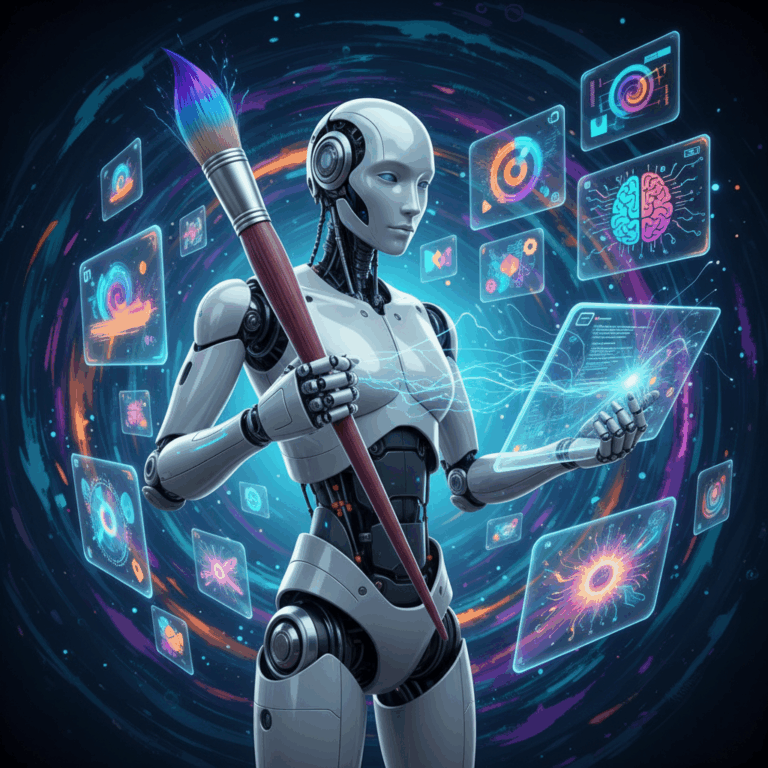
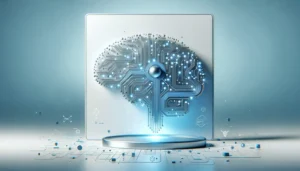
The artificial intelligence it is revolutionizing artistic creation, changing the traditional way of conceiving and producing works. Its influence ranges from automatic generation to creative collaboration.
This advancement has opened a new horizon for artists and audiences, promoting an interactive and plural art experience that challenges established norms about creativity and authorship.
Generative AI tools and how they work
The tools of Generative AI they combine data from historical works to learn styles and produce unpublished images. They work from the analysis of thousands of pieces that capture deep artistic patterns.
A notable example is Next Rembrandt, which uses algorithms to recreate works in a master's style, demonstrating how the machine can imitate human creativity with great fidelity.
These technologies use neural networks and machine learning, which allow not only to replicate but also to innovate, mixing elements to create original works within defined parameters.
Relevant examples and exhibits
Events such as The Unreal Exhibition in Amsterdam have shown projects where humans and machines collaborate to create surprising pieces, highlighting joint interaction as the central axis of modern art.
The World of AI·Imagination exhibition in New York also stands out, presenting works that explore the boundaries between human and automated creation, fostering a dialogue about authorship and process.
These exhibitions have brought to the fore the importance of AI as a legitimate tool in art, breaking down the barriers between technology and creative expression.
Ethical and conceptual dilemmas in AI-generated art
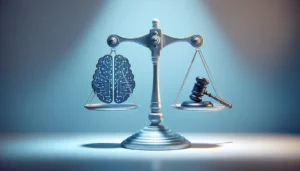
The advance of artificial intelligence in art raises multiple questions ethical dilemmas and conceptual that invite a deep debate. Questions about authorship and originality emerge as central themes in this new creative era.
These debates not only affect the perception of art but also challenge traditional notions about it creativity, talent and rights related to works generated by machines.
Furthermore, the use of previous data to train AI generates controversies about the legitimacy and legality of its artistic production, impacting the industry and the very definition of creation.
Questioning authorship and originality
Authorship in AI-generated art is a complex issue: the work comes from collaboration between humans and machines, making it difficult to determine who the true creator is.
This uncertainty calls into question originality, since algorithms depend on existing databases, fusing styles and generating variations based on previous work.
The debate invites us to rethink the classic concept of authorship, expanding it towards shared participation between human programming and the automatic process of AI.
Discussions on copyright and use of previous works
The use of previous works to train AI has sparked discussions about legality and ethics, especially when there is no consent from the original artists.
Copyright laws face unprecedented challenges, as machines generate parts that are based on the knowledge acquired from thousands of protected creations.
This scenario raises concerns about the protection of intellectual property and how to value the contribution of both original artists and new artificial creations.
Impact on the definition of creativity and talent
AI-generated art confronts the traditional idea of creativity, questioning whether it is exclusively human or whether a machine can also create with merit.
This phenomenon puts the conception of talent in tension, since algorithmic capabilities can imitate and combine styles without an intuitive or emotional process.
Reflection on expanded creativity
Many experts suggest that AI does not replace or nullify human talent, but rather enhances it, inviting us to redefine creativity as a dialogue between humans and technology.
Transformation of roles in the artistic industry
The emergence of artificial intelligence has caused one deep transformation in roles within the artistic sector. Artists now work in synergy with intelligent systems.
This collaboration produces new paradigms where human creativity it is complemented by the technical capacity of AI, generating innovative proposals and challenging traditional practices.
Collaboration between artists and AI systems
Artists use AI as a tool that expands their creative possibilities, delegating technical tasks to software while focusing their energy on conceptualization.
This active collaboration reconfigures the artistic process, where the machine not only executes but also suggests and contributes, creating a constant dialogue between human and algorithm.
Recent projects show how this alliance allows the design of hybrid works, in which human control is combined with the autonomous contribution of artificial intelligence.
Adaptation and development of new skills
Faced with this change, art professionals find it necessary to acquire skills in AI management, programming learning and data management to exploit the capabilities.
This evolution forces us to develop a more technical and strategic approach, where creativity is accompanied by digital skills that enhance the scope and sophistication of the works.
Consequently, the current artist is a comprehensive manager who masters both traditional inspiration and technological tools, projecting an innovative and multidisciplinary profile.
Market and acceptance of art generated by AI
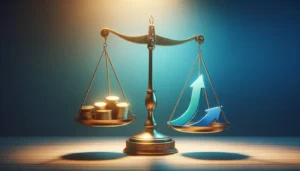
Art generated by artificial intelligence is gaining ground in the global market, transforming the way collectors and entities value works. A growing is observed inclusion in traditional and digital spaces.
Events and digital platforms have facilitated the visibility and commercialization of pieces created with AI, making the art market diversify and integrate disruptive technologies.
Incorporation in fairs, museums and digital market
Major art fairs, such as Arte Basel and Frieze London, have begun to include exhibitions of AI-generated art, legitimizing this practice. This inclusion opens new opportunities for artists and collectors.
Renowned museums also incorporate these digital works, enriching themselves with disruptive formats that attract a younger and more technological audience. In addition, digital markets and NFTs drive global dissemination and commercialization.
The convergence between art, AI and blockchain is creating an ecosystem where authenticity and ownership are managed in new ways, expanding the forms of interaction and commerce in the art world.
Reception of collectors and critics
Collectors are increasingly interested in acquiring AI-generated art, valuing innovation and the dialogue between technology and human creativity. This interest drives the demand and legitimacy of these works.
However, specialized criticism remains divided: while some celebrate the technological revolution, others question the authenticity and emotional value of parts created by machines.
This constant debate generates a dynamic space where the criteria of artistic appreciation are redefined, making acceptance depend on both the conceptual content and the context of creation.