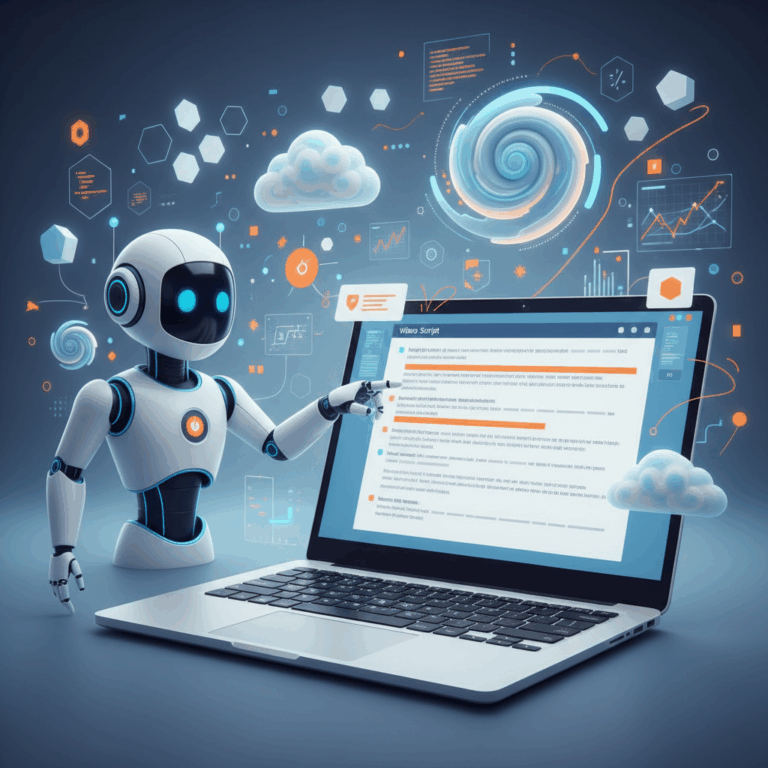
Fundamentals of writing scripts with AI
Writing scripts with artificial intelligence (AI) makes it easier to create content by generating automatic texts based on instructions or ideas provided by the user. This allows for a more agile and focused process.
By leveraging advanced tools, the creator can focus on editing and production, optimizing time and quality. AI supports everything from script structure to narrative and stylistic details.
Define topic, objective and audience
Before using AI to write a script, it is essential to define the central theme, the objective of the video and the target audience. This clarity is essential to guide content generation.
This information can be set manually or assisted by AI, which helps specify the tone and premise, ensuring that the result is tailored to the specific needs of the project.
Using advanced script generators
AI-based script generators use advanced language models to create initial drafts, structuring dialogues, descriptions, and content duration based on received prompts.
These systems allow parameters such as style or length to be adjusted, offering a solid base that can be customized and subsequently edited to fulfill the purpose of the video.
Customization and editing of generated scripts
Once the script is generated with AI, it is crucial to customize it to fit perfectly with the style and objective of the video. Editing makes it easy to adapt content to specific preferences.
Modifying details such as length, tone or structure allows the creator to obtain a more precise and effective script. These modifications optimize communication and the impact of the message.
Modify style, length and structure
Initially generated scripts can be adjusted in style to reflect a formal, informal or creative tone depending on the target audience. This flexibility improves connection with the audience.
The length of the script is also edited to fit the available time or video format, ensuring the message is clear and concise without losing relevant content.
Additionally, the structure can be reorganized to improve narrative coherence, create suspense, or emphasize key points. These modifications increase the narrative value and fluidity of the script.
Incorporate different narrative forms
One way to enrich the script is to include various narrative techniques such as dialogues, monologues, visual descriptions or even interactive elements to attract more attention.
AI can suggest linear, non-linear, or fragmented stories, allowing you to experiment with different ways to communicate the story more effectively and creatively.
Incorporating metaphors, symbolism or changes in perspective also helps generate deeper and more attractive content, favoring a unique audiovisual experience.
Editing to adapt the final content
The final editing stage is key to ensuring that the script meets the objectives defined before audiovisual production, correcting possible inconsistencies or errors.
Aspects such as coherence, tone, rhythm and suitability to the audience are reviewed, ensuring that the resulting script clearly communicates and maintains interest throughout the video.
This process can be done manually or using tools that integrate AI for automatic recommendations, thus accelerating the completion of the script for production.
Integration of scripts with audiovisual production
Integrating scripts generated with AI into audiovisual production allows ideas to be transformed into impactful visual content efficiently and quickly. This synergy optimizes the creative flow.
Current tools make it easy to convert texts into videos with multimedia elements, streamlining processes and maintaining coherence between script and final result. This enhances quality and reach.
Automatic script to video conversion
Automatic script-to-video conversion is a breakthrough that allows AI-generated text to be transformed into audiovisual content without the need for extensive manual intervention.
These platforms interpret the script, select images, clips and sequences accordingly, creating a first visual version of the project to easily improve or adjust.
This process reduces production time and costs, allowing creators to focus efforts on personalization and specific details of the video, achieving professional results.
Inclusion of narratives, subtitles and images
Integrating automatic narration, subtitles and visual elements into the video increases accessibility and communicative impact, aligning content with diverse audiences and formats.
AI generates natural voices to narrate the script, synchronizes subtitles to improve understanding, and adds relevant images or videos that complement the central message.
This combination facilitates a complete audiovisual experience, improving the reach of content and adapting to diverse digital platforms, from social networks to education.
Advantages and applications of AI in scripts
Using AI in script creation offers important advantages, such as speeding up content generation and facilitating the creative process. This allows creators to produce more in less time.
Additionally, AI helps overcome creative blocks by suggesting novel ideas and structuring the script clearly, ensuring quality results with less effort and greater fluidity.
Streamline creation and overcome creative blocks
AI streamlines the writing process by generating initial drafts quickly, allowing creators to focus on improving and customizing the script rather than starting from scratch.
By receiving automatic suggestions, users can overcome creative blocks and find new narrative perspectives, enriching the final quality of audiovisual content.
This speed and flexibility are especially valuable in projects with tight deadlines or when constant innovation is required to capture the public's attention.
Adaptation to multiple formats and objectives
AI tools facilitate the creation of scripts that easily adjust to various formats such as educational, advertising or narrative videos, adapting the content to each purpose.
The system allows you to modify length, style and structure, generating texts suitable for different platforms, from social networks to more extensive film or television productions.
This versatility allows creators from different areas to use AI to customize scripts that respond to specific objectives, improving communication with their audience.