Progress of AI in language translation
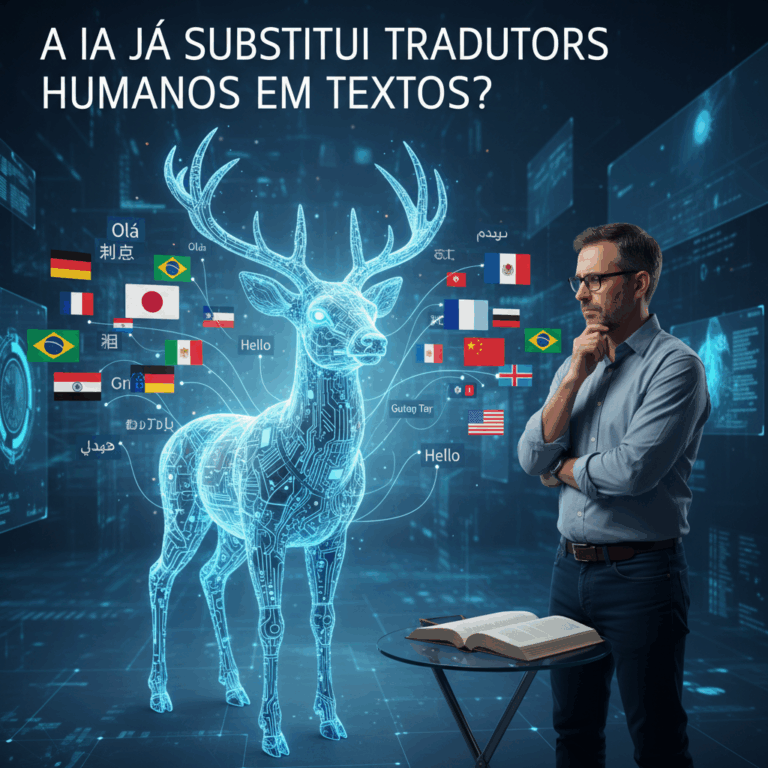
Artificial intelligence has revolutionized language translation, offering fast and economical solutions. Its advancement is thanks to innovative technologies that improve precision.
These tools have facilitated global communication, bringing cultures closer together and simplifying processes in various sectors. Its evolution promises to continue optimizing the quality of translations.
Additionally, AI has enhanced accessibility to multiple languages, benefiting both businesses and individuals. This technological progress redefines how we interact linguistically.
Key technologies: neural models and deep learning
Neural models, based on deep networks, are the center of current development in machine translation. These technologies imitate human learning to understand contexts.
Deep learning allows AI to process large amounts of data and improve translation quality by accurately identifying nuances and semantic relationships.
Thanks to these advances, systems such as multilingual transformers can handle text, voice and images with high fidelity, facilitating increasingly natural and coherent translations.
Applications and current precision of machine translation
Today, machine translation achieves an accuracy of 90-95% depending on the language, making it useful for sectors that require quick responses such as tourism or commerce.
This efficiency allows translations in real time, improving interaction between international users and allowing a more fluid and dynamic flow of information.
However, complex texts still demand human review to ensure accuracy and cultural sensitivity, consolidating AI as a support rather than a total replacement.
Limits of AI compared to human translators
Artificial intelligence still faces obstacles to fully reproducing them cultural nuances and the literary style that a human translator naturally grasps. These elements are key to an authentic and meaningful translation.
Interpretation of complex contexts and sensitivity to idiomatic expressions require human judgment that AI cannot replicate with complete precision. Therefore, its role is complementary.
Furthermore, adapting the translation to the target audience and considering dialect variants are aspects that AI handles with important limitations.
Cultural nuances and style in translation
Human translators identify and transmit cultural nuances that enrich the text and maintain its original spirit, something complex for an AI. Cultural sensitivity involves understanding local references and customs.
Likewise, choosing the appropriate style according to the genre and tone of the text is a task where human intervention is essential to preserve the author's voice and personality.
AI often translates literally without capturing double meanings or ironies, so the quality of the final text can be compromised without the translator's supervision.
Complex cases: literary, legal and technical texts
In literary texts, creativity and deep meaning require human interpretation to preserve metaphors and symbolism that AI does not fully understand.
Legal documents require precision and detailed knowledge of specific terminology that only a professional can guarantee to avoid serious errors.
Technical texts also require sector experience to correctly translate specialized terms and maintain consistency and accuracy in instructions or regulations.
Importance in sensitive documents
In these cases, translation failure can cause misunderstandings, legal implications or loss of trust, underscoring the irreplaceable need for the human translator.
Avoid bias and maintain semantic coherence
AI can reproduce biases present in the data with which it was trained, which could affect the neutrality of a translation.
Additionally, maintaining semantic consistency throughout long text represents a challenge for algorithms, which could lose context in machine translations.
A human translator recognizes these subtleties, adjusts language to avoid bias, and ensures that the message maintains its original integrity and fidelity.
Current use and complementary role of AI in translation
AI is mainly used as a efficient assistant in translation, by taking care of repetitive and time-consuming technical tasks.
Its complementary function allows human translators to focus on creative and complex aspects that require human cultural and linguistic judgment.
This collaboration improves overall productivity, avoiding common errors in simple translations and accelerating processes in different sectors.
AI as an assistant in repetitive and technical tasks
Artificial intelligence automates the translation of common texts, manuals and technical documents, improving speed and reducing costs.
Through deep learning, AI can identify technical terms and specific jargon, performing consistent translations without continuous intervention.
By handling standard and repetitive content, AI frees up the human translator, who can focus their talents on complex or creative interpretations.
Benefits in sectors such as tourism, commerce and education
In tourism, AI facilitates multilingual communication in real time, improving the traveler experience and cultural exchange.
International trade benefits from fast translations to negotiate contracts and documents, streamlining business processes and reducing barriers.
In education, AI supports the translation of varied teaching materials, expanding access to knowledge in different languages quickly and efficiently.
Future perspectives and human-AI balance
The continued evolution of artificial intelligence promises better translation tools, with greater precision and understanding of context. Advances will allow us to automate increasingly complex tasks.
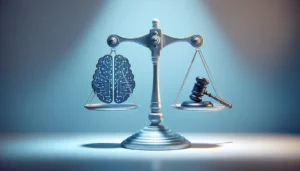
However, coexistence between human translators and AI systems will be essential to achieve high-quality translations that include creativity, precision and cultural adaptability.
This balance will enhance efficiency, combining the speed of AI with the critical judgment and sensitivity of the translator, key to specialized and creative texts.
Continuous improvements in translation technology
Machine translation models will continue to be perfected, integrating a greater capacity to understand styles, context and dialect variants, approaching human precision.
The incorporation of contextual intelligence and adaptive learning will allow AI to correct errors and anticipate specific needs of each text, improving the overall experience.
These improvements will expand the applicability of AI in more specialized areas, although the human role will continue to be necessary to validate results and provide nuances.
Importance of the human translator for creativity and precision
The human translator is essential to interpret metaphors, idioms and cultural references that AI cannot fully grasp, guaranteeing a faithful and nuanced translation.
Furthermore, the creativity of the translator is key to adapting the message to the public, maintaining the original style and intention, especially in literary or advertising texts.
Finally, accuracy and ethics in translation depend on human judgment, which evaluates consistency, avoids bias, and ensures the integrity of the translated content.