Definition and technology of AI chatbots
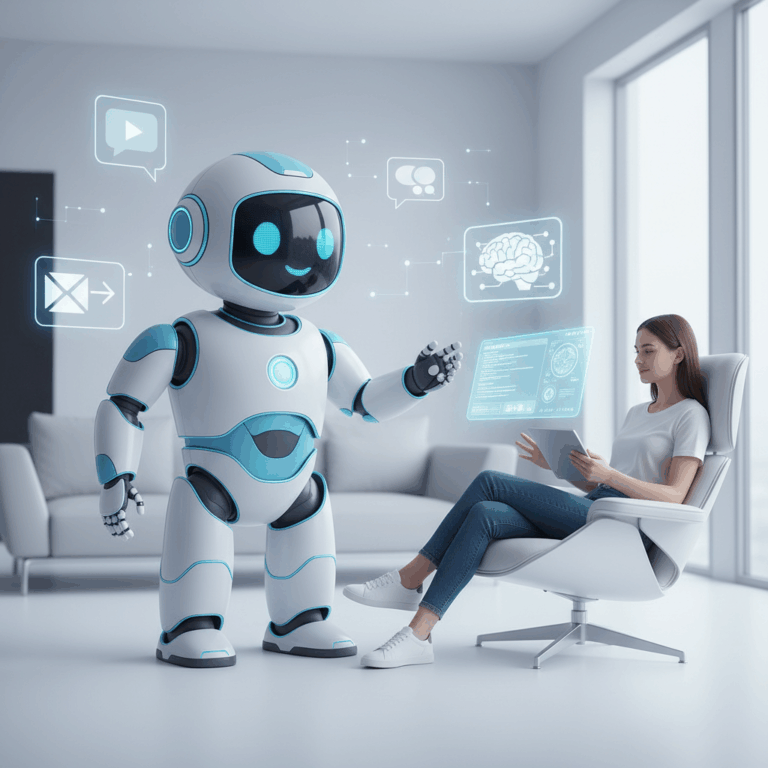
The artificial intelligence chatbots they are programs that simulate human conversations using text or voice. They work to answer queries automatically and efficiently.
These tools are designed to interact with users in various contexts, using advanced technologies that allow natural and adaptive communication in multiple applications.
Thanks to their ability to imitate human dialogue, AI chatbots have become key elements to improve the experience in different areas, both personal and business.
Artificial intelligence chatbot concept
An AI chatbot is software designed to maintain conversations with users using natural language. You can understand questions and offer consistent and relevant answers in real time.
Its main function is to automate interactions, which facilitates processes such as customer service, quick information and resolution of doubts, without direct human intervention.
These systems use models that simulate human understanding, allowing the conversation to flow naturally and adapt to various contexts and user needs.
Main technologies: natural language processing and machine learning
AI chatbots are based on the natural language processing (NLP), which allows us to understand and generate text or voice in a way similar to humans. This technology is essential to interpret requests.
The machine learning complement NLP by enabling the chatbot to improve over time, learning from each interaction and adjusting its responses to deliver increasingly accurate solutions.
These two technologies work together, making it possible for chatbots to process large volumes of data and adapt their responses, continually optimizing the user experience.
Everyday applications of AI chatbots
AI chatbots are present in multiple aspects of our daily routine, facilitating various tasks and improving interaction with digital services. Its use extends from customer service to personal support.
These tools automate repetitive processes, accelerate responses and offer immediate solutions, contributing to a more efficient and comfortable experience for both users and businesses.
Additionally, chatbots incorporate intelligence to adapt to different needs, allowing seamless integration into everyday activities ranging from online shopping to personal organization.
Use in customer service and sales
In customer service, AI chatbots answer frequently asked questions and offer immediate assistance, reducing wait times and improving user satisfaction. This speeds up the resolution of common problems.
In sales, these bots guide the customer in the purchasing process, recommend products and generate leads, helping to increase conversions with personalized support available 24/7.
By automating routine tasks, companies can focus their human staff on complex cases, optimizing resources and obtaining greater operational and economic benefits.
Functions in personal life
On a personal level, chatbots help manage agendas, set reminders and search for information quickly, simplifying the daily organization of users.
They also offer basic emotional support and personalized recommendations, improving well-being and making it easier to find products or services online.
Thanks to their accessibility from mobile devices and smart assistants, chatbots have been integrated as efficient and always available digital personal assistants.
Cost savings and optimization in companies
Companies implement chatbots to reduce operating costs by decreasing the need for constant human attention, especially in low-level or repetitive queries.
This optimizes internal processes and accelerates customer management, allowing an immediate response that improves productivity and strengthens the relationship with users.
Additionally, chatbots provide valuable data that helps identify behavioral patterns and areas for improvement, contributing to a more effective and tailored business strategy.
Evolution and benefits of chatbots in daily life
AI chatbots have evolved to offer a more personalized experience, adapting to the specific needs of each user in real time. This evolution improves interaction and satisfaction.
Thanks to their capacity for continuous learning, these bots can anticipate requirements and adapt their responses, offering more precise and relevant solutions that enrich the daily experience.
Technological development has allowed chatbots to not only respond, but also understand context, creating more natural and effective interactions that optimize multiple everyday activities.
Improvement in personalization and user experience
AI chatbots use previous data and behaviors to adjust their responses and provide more personalized attention, making each interaction feel unique and tailored to the user.
This personalization increases efficiency by offering specific information and solutions, saving time and reducing frustration in communicating with automated systems.
In addition, the user experience improves because these tools can recognize implicit needs, adapting the dialogue to address both functional and emotional aspects.
Impact and future of AI chatbots
AI chatbots are revolutionizing the way we interact with technology, making communication more intuitive and efficient. Its impact is visible in multiple sectors.
Thanks to their evolution, these systems are increasingly integrated into daily life, facilitating tasks and improving experiences, anticipating a future where digital interaction will be more natural and human.
Technological advancement promises even more sophisticated functionalities, with chatbots capable of understanding complex contexts and offering highly personalized responses, transforming the user-machine relationship.
Transformation of interaction with technology
Interaction with digital devices and services is being transformed thanks to AI chatbots, which facilitate fluid and natural dialogue, eliminating technical barriers for users.
These bots allow people to access information and services instantly, with accurate, context-adapted responses, improving accessibility and the overall experience.
In addition, integration with different platforms and devices allows communication to be omnichannel, making the technology more inclusive and easy to use in any environment.
Adaptability and continuous learning of chatbots
Modern chatbots are designed to constantly learn and adapt using machine learning techniques, improving the quality of their responses with each interaction.
This capability ensures that chatbots evolve based on changing user needs, detecting patterns and adjusting behaviors to offer personalized support.
Continuous learning also allows us to anticipate problems and offer preventive solutions, making interaction not only reactive, but also proactive and efficient.